

For about four years, my back decided when I quit fishing. I would push off from the ramp at Herrington Lake around seven, work the shade line along the bank, and by eleven my lower back had a hot knot in it that standing up in the kayak would not loosen. I tried a folded towel. I tried a stadium cushion. I tried sitting on my life jacket, which is a dumb idea and I do not recommend it. Then I bought the GCI Outdoor SitBacker, mostly because Earl was tired of hearing me complain, and it changed how long I stay out.
The SitBacker is a canoe seat with a back, and yes, I use it in a sit-on-top fishing kayak. It arrives with no assembly required, which matters when you are kneeling in gravel at a boat ramp with your husband already in the water. There is a 17 inch seat strap that runs behind the backrest, plus a shoulder strap with Auto-Fold Technology, so it opens, closes and carries like a camp chair. Folded it measures 3.7 by 16.5 by 16.5 inches. Open it measures 12.3 by 16.5 by 17.9 inches. It weighs 2.9 pounds and is rated for 250 pounds. The back itself is solid, with patented Back Comfort Technology so you can set the recline where it suits you, and the arm pads are included.
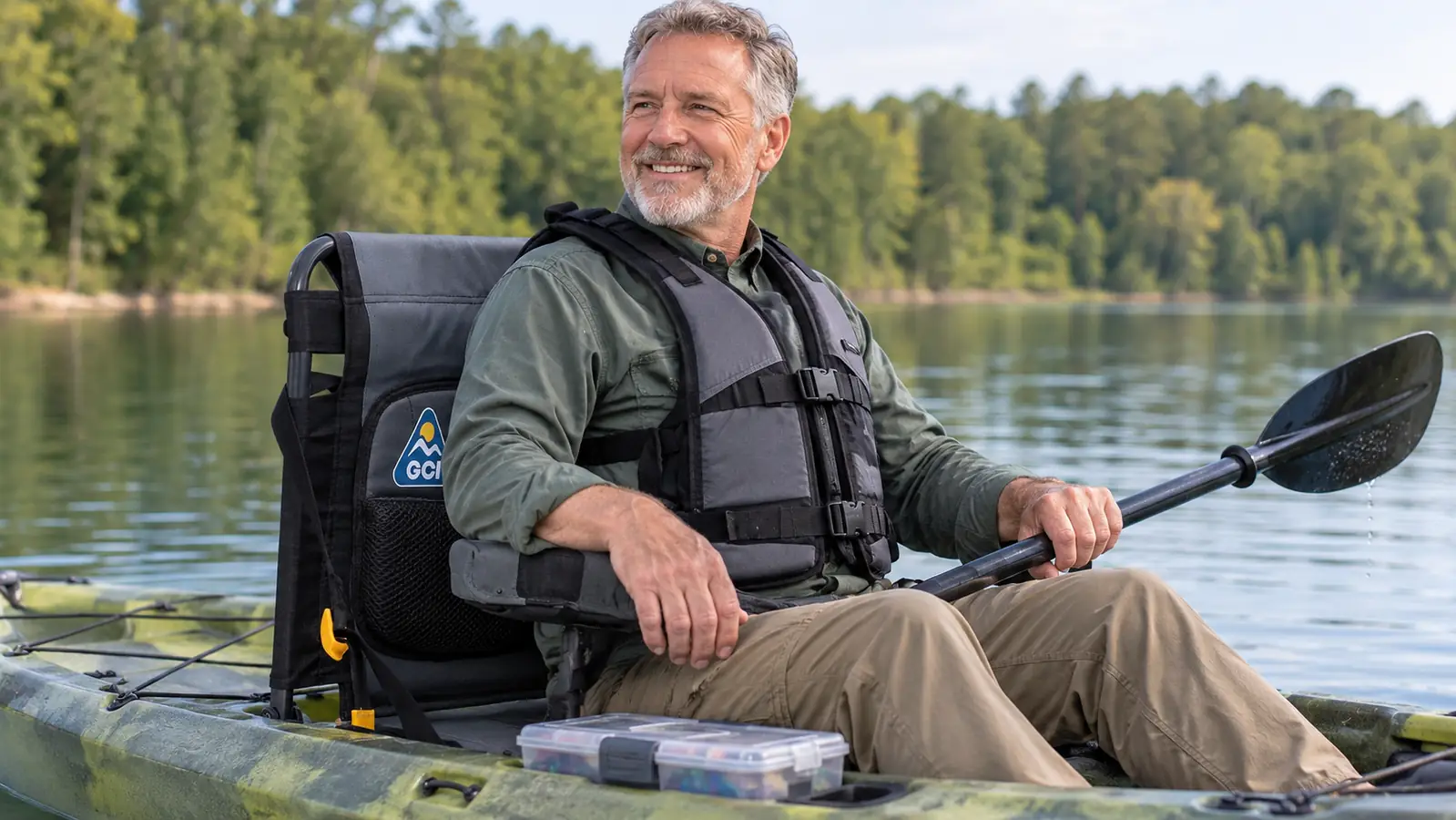
The first trip with it, I set the back a little more upright than I thought I wanted, because a seat that leans too far in a kayak makes you feel like you are falling backward. I dropped it in, ran the strap, sat down, and pushed off. Two hours later I noticed something odd. I had not thought about my back at all. I had been watching a heron work the shallows and thinking about whether the crappie were going to move shallower as the sun climbed. That is not a small thing when your usual rhythm is fish, wince, stretch, fish, wince.
What the seat actually does is hold your lower back up instead of letting your spine curl into the shape of the hull. On a sit-on-top, you are already sitting low with your knees up, and that puts your back in a C whether you mean it to or not. The solid back on the GCI Outdoor seat gives you something to lean into, and the recline adjustment means you can sit upright for casting and ease it back when you are just drifting with a bobber out. I keep mine fairly upright. Earl, who has a longer torso than me, likes his laid back one notch.
Earl borrowed it once, on a Saturday when his back was acting up, and I had to ask for it back twice before he handed it over. He paddles a borrowed kayak now and then and he is not fussy about gear, so that tells you something. He did say the shoulder strap made it easy to carry from the truck to the water, and he is right about that. It is 2.9 pounds and it folds flat, so it rides in the truck bed with the kayak and does not take up the space a full camp chair would.
The difference was not that it made my back perfect. It was that at noon I was still fishing instead of loading the kayak.
The Difference Between a Half Day and a Full Day
A cushion gives you a softer place to hurt. A seat with a solid back and an adjustable recline gives your lower back something to lean on, so the day ends when you decide it does.
Amazon Check Today's Price on Amazon →Now the honest part, because there always is one. A solid back takes up room. In my 10-foot sit-on-top, the seat back sits close to the tank well, and if I have a crate back there I have to think about how far I recline before I push off. The strap needs a minute of fiddling the first few times to get it snug, and if you set it loose the whole seat will shift under you when you lean. Set the recline before you leave the ramp, not in the middle of the lake with a rod in one hand.
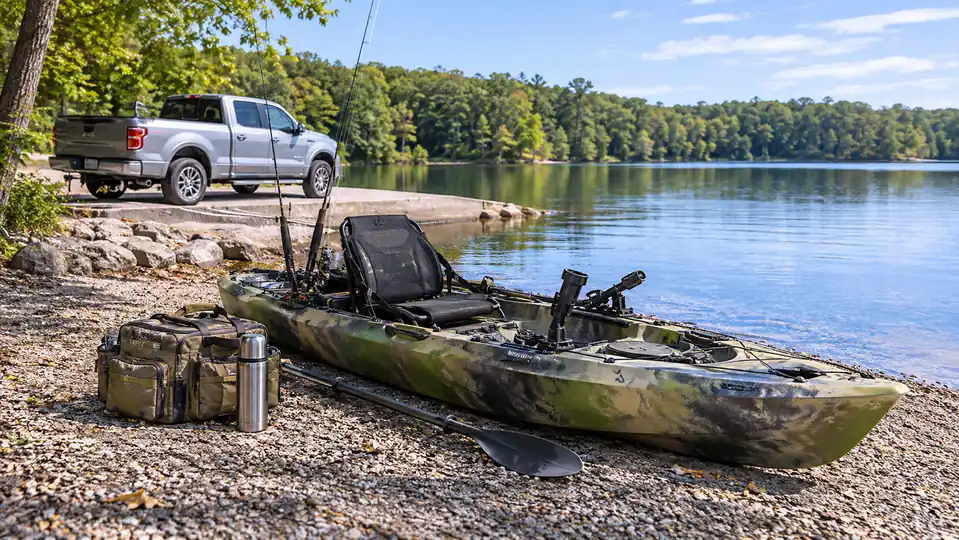
It is also not a pontoon cushion or a beanbag. If you want to sink into something soft, this is not that. It is a firm seat with a firm back, and the comfort comes from support rather than padding. The first ten minutes of the first trip, I was not sure I liked it. By the end of that trip I was sure. It is the kind of gear that feels wrong until your back stops complaining, and then you stop noticing it entirely.
I keep it in the garage between trips, folded, with the strap looped over a hook so it does not get tangled with the paddles. Biscuit, my hound, rides along on calm days and he has stepped on it more than once without doing any damage. The arm pads wipe clean with a rag. After two seasons of lake water and gravel and one memorable afternoon of rain, it still folds and opens the way it did on day one.
If you are a paddler with a stiff lower back who has been cutting every trip short, this is the cheapest fix I have found that actually addresses the cause. Not a cushion. Not a rolled up towel. A seat with a back that adjusts. I wish I had bought the GCI Outdoor SitBacker in my first year of kayaking instead of my fourth.
What I'd Tell You If We Were Sitting at My Kitchen Table
I would tell you to stop buying small soft things and hoping they add up. A towel under you does nothing for the part of your back that is actually tired, which is the part that has been holding your spine up for three hours with no help. I would tell you to set the recline on dry land, snug the strap, and give it a full trip before you decide. And I would tell you that the goal is not to fish in luxury. The goal is to still be on the water at two in the afternoon, when the light changes and the fish move, instead of sitting in your truck with a heating pad.
One Less Reason to Come In Early
If your back has been setting your quitting time, give it something to lean on. The SitBacker folds flat, carries with a shoulder strap and sets up with no assembly.
Amazon Check Today's Price on Amazon →