

Six years ago I bought my first kayak, a 10-foot sit-on-top that weighs about as much as a sack of feed, and I paddled that whole first season with the oar that came with the deal. By August my shoulders were hollering at me before I ever got back to the ramp. So I started buying paddles the way some folks buy shoes. The one that has stayed in my truck is the OCEANBROAD kayak paddle in the 230cm length, and the question I hear most often at the bait shop is whether a fiberglass paddle would be a real upgrade. Honest answer: for some paddlers, yes. For the kind of water I fish, not entirely.
Here is the short version before I get in the weeds. The OCEANBROAD is an aluminum alloy shaft with a fiberglass reinforced PP blade, 2.5 pounds, three locking positions for blade angle, and it comes apart into two sections so it rides in the truck bed next to the kayak. A fiberglass paddle is lighter and stiffer, and on a long open-water day you feel both of those in a good way. This July a neighbor let me use his fiberglass paddle for three weeks so I could compare instead of guess. I picked it up on a Tuesday, walked it down to the dock, and the first thing I noticed was how little it weighed in my hand. The second thing I noticed was that I was already handling it like it cost me something. I had been saving up since spring, mostly because my shoulders ache after a long float and I figured lighter had to be better. Three weeks later I still think lighter is better on open water, but I did not order one, and that surprised me. The neighbor keeps his paddle in a padded bag in the garage. Mine lives in the bed of a silver pickup with a bed extender and a cooler, and that difference tells you most of the story before I get to the table.
| OCEANBROAD Alloy Paddle | Fiberglass Paddle | |
|---|---|---|
| Shaft | Aluminum alloy, 1.1mm shell thickness, with a shrinking PE tube cover over the joint | Fiberglass, warmer in the hand and stiffer under a hard pull |
| Blade | Fiberglass reinforced PP, takes rock scrapes and gravel bars without chipping | Lighter in the swing, but it chips and splinters on gravel |
| Weight | 2.5 pounds | Lighter, and you feel the difference by hour three |
| Lengths offered | 218cm, 230cm and 241cm | Sold in sized lengths too, matched to paddler height and boat width |
| Breaks down | Detaches at two sections for the truck bed | Usually two or three sections as well |
| Blade angle | Three locking positions, set it in April and forget it | Adjustable feather, often with a lever that can work loose |
| Cold morning grip | Bare aluminum pulls the heat out of your hands in October | Stays closer to air temperature |
| Shallow rocky creek | Push off bottom and drag it without flinching | You start babying it without meaning to |
| Best use | Calm lakes, farm ponds, slow creeks, spare or guest paddle | Long days and open water where weight matters |
Where the OCEANBROAD Paddle Wins
It survives a bad launch. Most of my paddling is on Herrington Lake and a few slow creeks and farm ponds around Danville, and those creeks run skinny by late summer. The second Saturday in July I put in at a gravel ramp on a local creek with the water barely moving, and I used the blade to push off a gravel bar three times before I ever got fifty yards. I knocked it against a stump. I laid it across the cockpit while I untangled a line. I dropped it on the concrete ramp once and watched it slide off the tailgate another time. The fiberglass reinforced PP blade has taken every bit of that without chipping or splintering. There is some rash along the edge and that is the whole story. My neighbor's fiberglass paddle never got treated that way, mainly because I would not let it, and that tells you most of what you need to know right there. If I had been using his paddle that morning I would have been easing it into the gravel like it was made of eggshells, and I would have missed the best part of the morning worrying about it.
I also like that the thing stops being interesting. Three locking positions let me set the blade angle in April and forget it until October. I set mine on the middle position the first week I had it and I have not moved it since. The shaft has a shrinking PE tube cover where the two halves join, which keeps grit out of the connection when I am kneeling in sand at the ramp. I have had cheaper two-piece paddles that got gritty at the joint and then refused to come apart without a wrestling match. This one has not done that. And it detaches at two sections, which matters more than you would guess in a silver pickup that already has a bed extender, a cooler and a tackle box in it. A one-piece paddle rattles around back there and gets on my nerves. This one breaks down, slides in, and does not fight me at six in the morning. The listing gives the package as 47 by 6.5 by 1 inches, and I can tell you the pieces fit behind the cab without hanging out the back.
One more thing, and it is a small one that turned out not to be small. The paddle came with a leash. I did not think I needed a leash until the afternoon a gust took my old paddle off the deck and I watched it float away while I paddled with my hands like a fool. Now the leash goes on the boat every trip. Biscuit, my 7-year-old hound, rides along on calm days and has shown no interest in the paddle, but a dog in the boat is one more reason to keep things tethered. For somebody who paddles alone on a quiet lake, that little strap is worth more than any weight savings.
Where a Fiberglass Paddle Wins
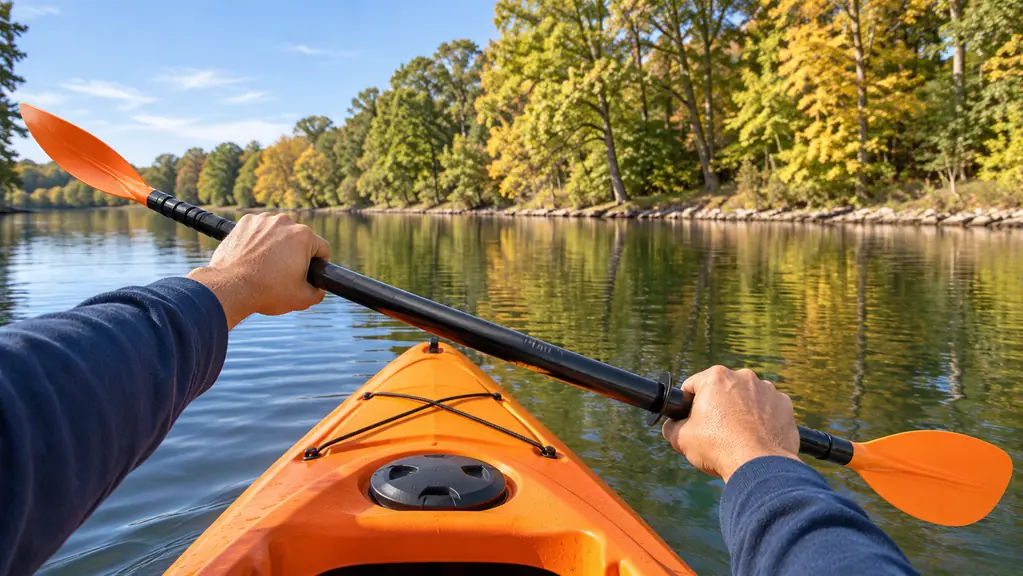
Now the other side, because I did borrow one and I am not going to pretend otherwise. A fiberglass paddle is lighter. My neighbor's paddle is well under the 2.5 pounds of the OCEANBROAD, though I never put it on a scale, and you will not notice that in the first twenty minutes. You notice it in hour three. I ran the lake loop on three Saturdays in July with his paddle and the same loop on the other Saturdays with mine. Stiffer material puts more of your pull into moving the boat and less into flexing the shaft, and at the end of a long open-water day my shoulders were less cranky than usual. By the time I got back to the ramp at noon I was not reaching for the truck bed to pull myself up, which is not nothing at 61. What I did not expect was the difference in the catch. The fiberglass blade enters the water cleaner and comes out with less shimmy, and I found myself paddling a little faster without meaning to. That is fine on open water. On the creek it just meant I hit the next stump sooner. With a stiff lower back and shoulders that talk to me after a long float, I am not going to wave off the lighter one.
It is also kinder on a cold morning. An aluminum shaft pulls the heat straight out of your hands in October, and I have cut a float short because of it. The first cold morning I took the OCEANBROAD out last fall, I had to put my hands in my pockets every twenty minutes. Fiberglass stays closer to the air temperature. The catch feels cleaner too, which is hard to describe unless you have felt both on the same stretch of water. What I did not like was how careful I got with it. I found myself easing that paddle into the gravel instead of shoving off the way I normally do, and I do not want gear I have to baby on a creek bank. The neighbor told me his paddle has a lifetime warranty and I still did not want to test it on a gravel bar. That is the whole tradeoff in one sentence.
The Paddle That Came Back From Every Gravel Bar
Aluminum alloy shaft, fiberglass reinforced PP blade, 2.5 pounds, three locking positions, two sections and a leash in the box. It lives in my truck bed from April to October and it has not let me down yet.
Amazon See Today's Price on Amazon →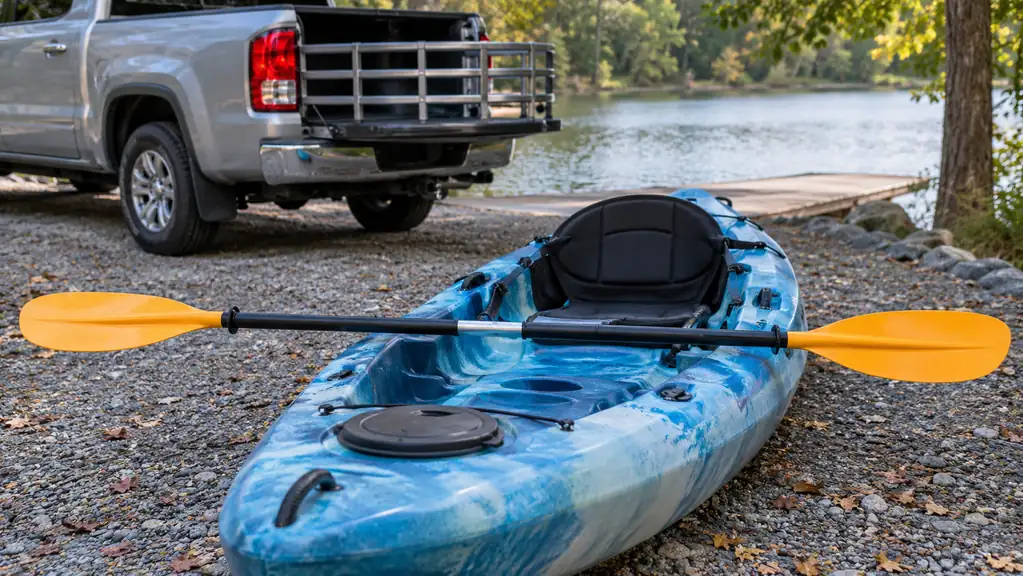
What Three Weeks of Switching Back and Forth Taught Me
I ran the same two miles of slow creek on Tuesdays and Thursdays and a lake loop on Saturdays, alternating paddles so I was not comparing a fresh arm to a tired one. I started the first week of July and finished the last week. Tuesdays were the OCEANBROAD, Thursdays were the fiberglass, and I swapped them on Saturdays. What I found: on the lake loop, the fiberglass paddle was easier, no question. On the creek, where I am pushing off bottom and dodging stumps, the OCEANBROAD was easier, and not because of weight. Because I was not worried about it. That worry is its own kind of tired, and it adds up over four hours. I also noticed that the creek wore me out less on the days I used the OCEANBROAD, even though it is heavier. I think that is because I was not babying it. I was just paddling.
The other thing I noticed is that neither paddle made me a better paddler. My shoulders hurt less with the lighter one on long days and that is real. But the fix for sore shoulders turned out to be shortening my stroke and pulling with my torso instead of my arms, which I learned the slow way. I spent the first two seasons pulling with my arms and wondering why I was tired by ten in the morning. Now I count a slow stroke, one, two, three, and I let my back do the work. If you are buying a paddle hoping it will cover for a bad stroke, neither of these will do it. If you already paddle reasonably and you want something that holds up, the choice comes down to your water.
Earl took the OCEANBROAD out in the borrowed kayak one Saturday and handed it back saying it felt like a paddle, which from him is a compliment. He is 64 and does not care about gear. He paddled a farm pond for two hours, caught one bass, and did not mention the paddle again. That is roughly my point. For two hours on a farm pond a few times a month, the aluminum shaft and the plastic blade are not holding anybody back, and the money you did not spend stays in your pocket where it does some good. Biscuit rode along that day and slept in the shade of the seat the whole time.
Hour three on open water is where the fiberglass paddle earns its keep. Hour five on a rocky creek is where the OCEANBROAD takes it right back.
Who Should Buy Which
Buy the OCEANBROAD if your water is shallow, snaggy or full of stumps. Buy it if you drag your boat over gravel to launch, if you want a spare in the truck for a guest, or if you just cannot see yourself being gentle with a paddle. It is also the one I would hand to a beginner, because there is nothing on it to fuss with and nothing on it to break. Three lengths cover most recreational and sit-on-top boats, and 2.5 pounds is not a burden on a two-hour float.
Go fiberglass if you regularly paddle three or four hours at a stretch, if you cover distance on open water, or if your shoulders are already giving you grief and you want every advantage you can get. Just know what you are getting into. It is a tool that wants a little care on a gravel bank, and if you are the sort of person who shoves off with the blade, you will chip it and then you will be sore about it. I know, because I am that person.
Your Water Decides, Not the Label on the Shaft
If you launch off gravel and fish skinny creeks like I do, the 230cm OCEANBROAD is the sensible one for a 10-foot sit-on-top. If your boat is wider or narrower, check the 218cm and 241cm before you order.
Amazon See Today's Price on Amazon →