

The first two hours of a kayak trip are the good part. I push off from the ramp at Herrington Lake, the water is still glass, and I feel like I have all the time in the world. The problem was never the going out. It was the coming back.
Somewhere around the third hour my shoulders start talking to me. By the time I turn toward the ramp, every stroke has a little complaint attached to it. I am sixty-one years old with a stiff lower back, and I paddled for years with whatever paddle came with the boat, which was a two-piece thing that wobbled at the joint and felt like swinging a fence post. I figured that was just kayaking. Turns out it was just a bad paddle.
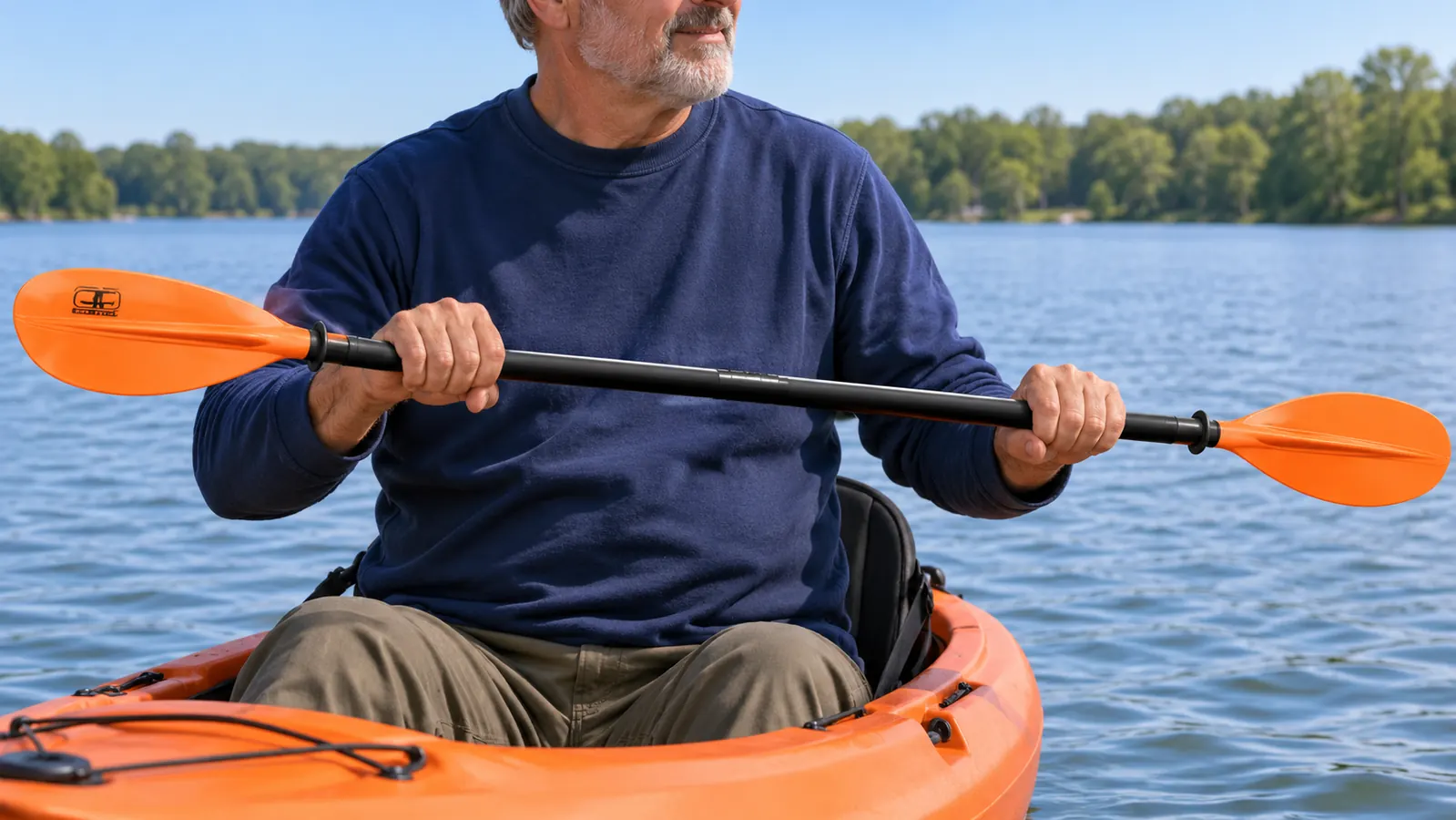
I am not a gear person. I am a retired school bus driver from outside Danville, Kentucky, and I care about three things: does it work, does it hold up, and did I waste my money. So when I started looking at paddles I looked at the plainest thing I could find that had a real chance of being decent. That is how I ended up with the OCEANBROAD kayak paddle in the 230cm length, which is 90.5 inches, and why I am writing this down for anybody else who dreads the return trip.
Here is the honest part up front. A paddle is not going to fix a bad back or make you twenty years younger. What it can do is stop adding problems of its own. The wobble is what got me. My old paddle had play at the connection, so every stroke I was pushing against a joint that gave a little before it caught. That is wasted effort on every single stroke, and on a three-hour paddle it adds up to a whole lot of nothing.
The paddle that stopped adding problems of its own
A 230cm aluminum and fiberglass two-piece paddle with three locking positions and a leash, so the joint stays put and the paddle stays with the boat.
Amazon Check Today's Price on Amazon →My old paddle had play at the joint, so every stroke I pushed against something that gave a little before it caught. On a three-hour paddle that is a lot of wasted work.
The OCEANBROAD paddle is a two-section aluminum alloy shaft, 1.1mm shell thickness, with a fiberglass reinforced PP blade. It breaks down to two pieces, which matters more than I expected, because it now lives in the bed of my silver pickup under the bed extender instead of taking up the whole length of the truck. Setting it up takes about as long as untying the straps. It has three locking positions for the blade angle, and I found the one I like in about ten minutes on the water and have not moved it since.
The other change is the paddle leash. I have come closer than I want to admit to watching a paddle slide off the deck and float away while I was busy with a fish or a tangled line. The leash clips to the boat and to the paddle, and it means I stopped holding on out of pure fear. That is a small thing that turns out to be a big thing when you are alone on the water at the far end of a creek.
Weight is 2.5 pounds, which is not the lightest paddle on the market and I want to be straight about that. If you are doing long open-water crossings or racing, you will want something fancier and you will pay for it. But for calm lakes and slow creeks, which is what I paddle, it is fine. My shoulders still get tired by hour four. They just do not get that grinding, jointed-out feeling that used to come with it.
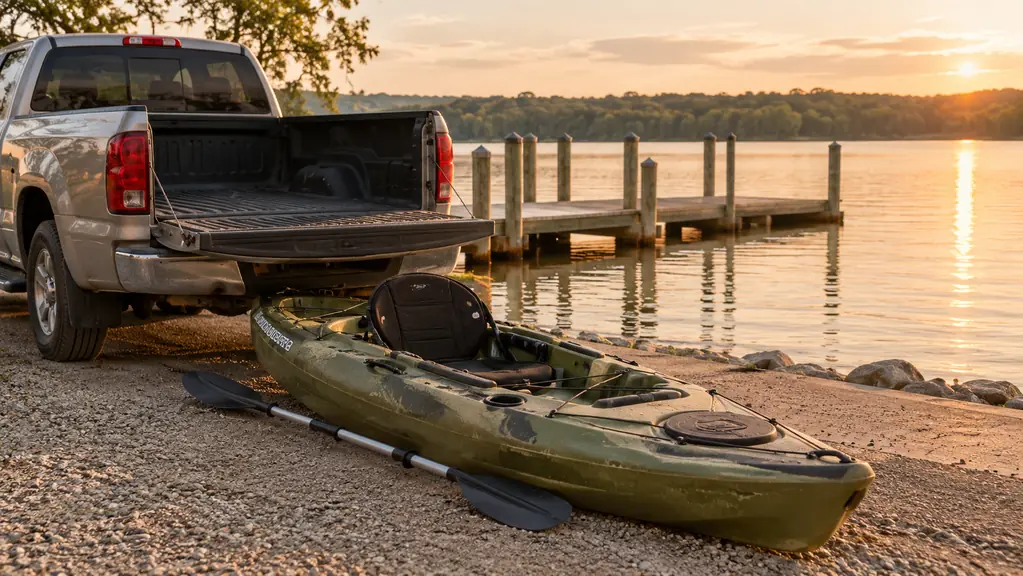
One more honest note. The shaft has a shrinking PE tube cover, and in cold spring water your hands will notice the difference between that and a bare grip. I wear gloves from April through May anyway. And if you have never measured for a paddle, do not guess. My 10-foot sit-on-top is about 60 pounds and sits wide, and the 230cm length puts my hands where they need to be without me leaning or reaching. A too-short paddle will make your shoulders hurt faster than a heavy one will.
What I'd Tell You If We Were Sitting at My Kitchen Table
I would tell you that most of the misery in kayaking is not the kayaking. It is the equipment you settled for because you were tired of shopping. I paddled five seasons with a paddle I did not like because I thought replacing it was a fuss. It was not a fuss. It took one afternoon of reading and one trip out to know the difference.
I would tell you to buy the right length before you buy the fancy features. Measure from the ground to about your nose if you want a rough starting point, then think about how wide your boat sits and how high above the water you are. Wider boat, longer paddle. That is the whole trick, and nobody at the ramp told me that for years.
And I would tell you to spend your money where you will feel it every single stroke, not where it looks good in a photo. The OCEANBROAD paddle is not going to impress anybody at the launch. It is going to be the thing you are quietly glad you brought at hour four, when the ramp finally comes into sight and you realize you are not dreading the last half mile anymore.
I still come home tired. That is kayaking. But I come home tired in my shoulders and my arms instead of in my lower back and my temper, and Earl will tell you that is a real improvement in the household. If your last forty minutes on the water are the part you dread, look at your paddle before you look at anything else.
Stop dreading the last half mile back to the ramp
230cm, 2.5 pounds, three locking positions, breaks into two pieces, leash included. The plain fix for the part of the trip you stopped enjoying.
Amazon Check Today's Price on Amazon →